
Associate Professor Susanna Venn | Team Leader
I’m a botanist and plant ecologist with a keen interest in the processes that shape vegetation patterns in alpine areas, such as how snow influences plant community patterns, processes and community (re)assembly. My research investigates high elevation shrub encroachment dynamics, plant recruitment and regeneration, alpine treeline dynamics, long-term vegetation change on alpine summits and how alpine plants will respond to future climates which are hotter, drier, and more susceptible to frost events. Research results are applied to park management outcomes through working alongside NSW National Parks and Wildlife Service and Parks Victoria.

Dr Tricia Wevill | Team Leader
I am a plant ecologist researching the impacts of changed disturbance regimes on plant community function. Most of my current research focusses on how altered fire regimes and planned burning impact recruitment processes in biodiverse heathy woodland systems. I work mainly with honours and postgraduate students on projects developed with land management agencies. These include understanding how frequent burning influences interactions between fungal and vascular plant communities, soil seedbank dynamics and seedling recruitment after winter burns. Other projects include mapping Phytophthora cinnamomi infestations in heathy woodland systems, understanding its impact on susceptible plant communities and methodologies for restoration post infestation.
See more at Deakin.

Dr Meg Hirst | Honorary Fellow
I am a plant ecologist, horticulturist, and trainer with specialist skills in seed banking for ex situ plant conservation through my employment in the Victorian Conservation Seedbank, Royal Botanic Gardens Victoria. My research interests are in the field of seed ecology, with a focus on germination and dormancy strategies of Australian alpine species. I am currently involved in an ARC linkage project Mountain Champions, exploring the germination niche breadth of key alpine species commonly used in rehabilitation programs in alpine areas.
I enjoy sharing the experience of growing plants, particularly species considered endangered in the wild and assessing their horticultural potential. This interest sparked the Raising Rarity project – a collaborative effort across conservation horticulture, seed science, genetics, and education. The project takes an integrated approach to conserving rare and threatened Victorian species in the wild, using representative populations in living collections, research plots in school grounds, and garden plots in the home garden.

Tara Lewis | Lecturer, Environmental Science
I am a botanist and palaeoecologist who studies plant remains from environmental and archaeological records. I use plant macrofossil analysis to provide insights on plant landscapes and reconstruct vegetation history over thousands of years (Late Quaternary). The results allow me to investigate the origin status of plant species, explore biogeographic patterns and examine human impact on ecosystems, particularly islands of the Indo-Pacific and Atlantic Oceans. My other research interests include soil seedbank dynamics, wetlands and plant ecology in heathlands in response to planned burning.
See more at Deakin.

Ella Plumanns Pouton | Lecturer, Environmental Botany
I am a plant ecologist who primarily works in biodiversity conservation and fire and disturbance ecology. I investigate the impacts of fire, climate and land-use on plant populations and related ecological processes. This means studying species across their life cycle, from seeds to mature plants, and learning about the fascinating relationships between plants and the web of animals, people, and landscapes that they're part of. This work helps protect plants from extinction. I am passionate about the connection of research to practice, particularly in the continued improvement of environmental management and conservation. I work closely with industry partners in Government and from Traditional Owner Corporations, and collaborate with interdisciplinary, international teams. I also currently serve as the Red List Authority co-Coordinator for the IUCN Australian Plant Species Specialist Group, that provides science-based support for species assessment and conservation efforts.
I am available for supervision of honours students and co-supervision of PhD students interested in plant ecology, fire ecology, and conservation biology.
See more at my LinkedIn and Bluesky.

Danny White | PhD Candidate
Daniel White is a PhD candidate working under the supervision of Assoc. Prof. Susanna Venn and Dr Megan Hirst. His research explores the impacts of climate change on the recruitment and survivorship of hydrologically sensitive alpine plants, and how different regenerative strategies, particularly clonal reproduction, may shape the way that we think about ex-situ conservation practices. This work includes a case study on the relationship between population genetics and recruitment potential of the Silky Snow Daisy, Celmisia sericophylla under future conditions. Daniel works as a research assistant for the Victorian Conservation Seedbank (VCS) at the Royal Botanic Gardens Victoria. Prior to working in seed ecology, Daniel completed a Master of Science (Botany) at the University of Melbourne, with a major research project looking at the impacts of disturbance on vegetation assemblages in the understory of wet sclerophyll forests. A major focus of the work was comparing plant responses based on regeneration strategy (Australian Journal of Botany 67(4)). Daniel has also worked as a research assistant on several vegetation ecology projects at the University of Melbourne, and as a botanical consultant for three years.

Dr Virginia Williamson | Research Fellow
I’m a plant physiologist with a PhD in plant water stress. I’m particularly interested in plants’ physiological responses to limited water and am currently working on a three-year grant from the Hermon Slade Foundation entitled “High and Dry: Understanding alpine plant water stress in a drying climate”. This project uses rain-out (drought) shelters built by the Australian Mountain Research Facility at four locations across two States: Kosciuszko National Park (NSW) and the Bogong High Plains (Vic). I am also interested in the untapped horticultural potential of Australian alpine plants and have a small research grant aimed at bringing one of these plants into cultivation.
See more at Deakin.

Sally Neeser | Research Assistant
I am a recent First Class Honours student in Environmental Science at Deakin University and a Research Assistant with the eXtreme Plant Ecology Research Team. My Honours research, supervised by Assoc. Prof. Susanna Venn, investigated the role of snow cover and snow melt as an ecological driver and its effects on the community composition of a threatened Victorian snowpatch over time. Additionally, I conducted a germination experiment to assess how snow cover duration influences the germination strategies and success of four snowpatch species.
See more at my LinkedIn.

Clare Vernon | PhD Candidate
Clare Vernon is a PhD candidate working under the supervision of Assoc. Prof. Susanna Venn, as well as Prof. Emily Nicholson (University of Melbourne), Dr. Jess Rowland (Monash University) and Dr. Chloe Sato (ACT Government). Her research focuses on the IUCN Red List of Ecosystems framework, the international standard for assessing ecosystem condition and seeks to improve the way we assess both ecosystems and integrate these assessments into policy and planning. This work includes assessing the risk of collapse for two alpine ecosystems (grasslands and open heathlands, and closed heathlands). Prior to working in conservation science, Clare completed a Bachelor of Environmental Systems (Hons 1) at the University of Sydney, with a major in terrestrial ecosystems and a research project focusing on differences in stomatal response and water retention of the Eucalyptus genus when responding to drought conditions. Clare has also worked as a project coordinator and project lead for a major grassroots conservation organisation and within the education sector, leading a sustainability and behaviour change program with senior NSW school students.

Mohan Pandey | PhD Candidate
I am a plant ecologist with a special interest in studying plant functional traits and ecophysiology of alpine plants, particularly in relation to their responses to extreme environmental conditions and climate change. During my PhD, I aim to study how alpine plants respond to increasing temperatures and limited water availability, linking community composition, functional traits, plant water relations, and other physiological responses. I'll be using the Australian Mountain Research Facilities (DroughtNet and FutureClim shelters) and conducting manipulated glasshouse experiments to further explore these dynamics. The findings will provide a knowledge base for future restoration and rehabilitation programs in alpine landscapes.
See more at my LinkedIn and ResearchGate.

Lukiel dos Santos Oliveira | PhD Candidate
Luke is a PhD candidate interested in understanding the resilience of alpine vegetation to environmental changes. He is passionate about plants and has completed a Biological Science degree and a master’s degree in Botany in Brazil. His PhD project involves a combination of population genomics and common-garden experiments to test for adaptive genetic differences among populations of functionally important Victorian alpine plant species at different elevations and their gene flow among those gradients. Luke aims with this project to anticipate future adaptive responses in a climate change scenario and help improve biodiversity outcomes (e.g., environmental resilience and fitness of revegetated areas) by identifying alpine plant species with reduced adaptive potential and in need of intervention, as well as 'climate-ready' seed sources for restoration purposes.

Ashlen Campbell | PhD Candidate
Ashlen is a PhD candidate with a particular interest in exploring complex interactions across different trophic guilds and species. To better understand these relationships, she is investigating the impact of feral ungulates on plant-pollinator communities in Australia’s alpine and sub-alpine landscapes. She is interested in the ways that plant-pollinator relationships shift in response to disturbance from introduced species, and hopes that her research can assist in decision-making for introduced species management, as well as helping to improve conservation outcomes for native plants and insects.

Clare Finnigan | Honours Student
My Honours project under the guidance of Dr. Damien Callahan, Dr. Pieter Arnould and Assoc. Prof. Susanna Venn looks to explore the changes of the primary metabolism and physiology of Eucalyptus pauciflora seedlings under a combined heatwave and drought event. This will be completed using Climatrons for a controlled environment. I’m fascinated with plant changes under abiotic stressors, in particular the effects of a changing climate, and so aim to gain a greater understanding of these impacts for the future of our precious plants.
See more at my LinkedIn.
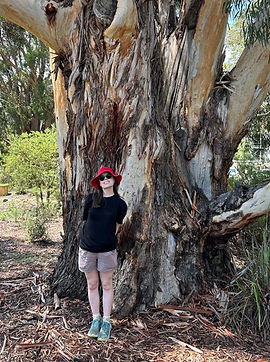
Alex Martin | Honours Student
Alex is a current Honours student interested in understanding the impacts of a warming and drying climate on Australia’s alpine vegetation. Her Honours project investigates long-term changes to floristic community composition and structure on mountain peaks in Kosciuszko National Park. Supervised by Assoc. Prof. Susanna Venn, this project continues the monitoring of permanent plots as part of the Global Observation Research Initiative in Alpine Environments (GLORIA) project. Alex's research aims to improve our understanding of plant diversity in Australia's alpine region and risks to this diversity from climate warming. Alex has previously investigated the impacts of experimental drought on alpine vegetation in Victoria’s alpine region within the Drought-Net experiment.
See more at my LinkedIn.

Molly Farquharson | Honours Student
Molly (They/Them) is an honours student investigating the origins of Climacium dendroides Marsh Tree-moss in Australia. The species is a predominantly northern hemisphere species with disjunct populations in Australia and New Zealand. There is anecdotal evidence that southern hemisphere populations may have been introduced within the last 200 years. The project will specifically focus on the Victorian populations, assessing morphological traits and genetics, while also reviewing literature available on the species and introduction. Molly is working under the guidance of Dr Matt Dell and Dr Tricia Wevill. Molly also has experience as a botanist in the environmental consulting industry.
See more at my LinkedIn.
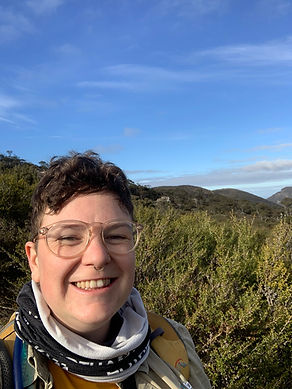
Teah Coate | PhD Candidate
I am a PhD student and plant ecologist with a keen interest in ecological responses to disturbances in heathy woodlands, specifically fire and pest management strategies. My research involves assessing how spraying phosphite to manage Phytophthora cinnamomi impacts soil fungal diversity. I’m interested in understanding the link between fungi and plant community composition, and the long-term impacts if fungi with plant associations are suppressed or eliminated from an area. My research also involves exploring the use of fire and phosphite to facilitate the recruitment of Phytophthora-susceptible plant species. I work as a Graduate Researcher Teaching Fellow, where I teach and mark for ecology, botany, bushfire, and statistics classes at Deakin University.
See more at my LinkedIn.
